We watched people - parents with strollers, elderly neighbors, kids walking to school - forced into the street because there was no safe path on the sidewalk. Sidewalks are public infrastructure. They deserve the same attention we give to roads. So we asked a simple question: why are we still clearing sidewalks by hand? Why isn't there a better way? We're building that future in the open, one rover at a time.
muni was founded in 2025 in Cleveland, Ohio. We're a small team of engineers who believe public spaces should work for everyone, and that starts with basic maintenance: keeping sidewalks clear, safe, and accessible year-round.
We're looking for 3-5 municipal partners in the Midwest to deploy bvr1 fleets in winter 2026. Pilot partners get:
Ideal partners: cities with 10-50 miles of sidewalk, existing public works team, willingness to iterate. Also: university robotics teams and research labs.
Apply for the pilot program →
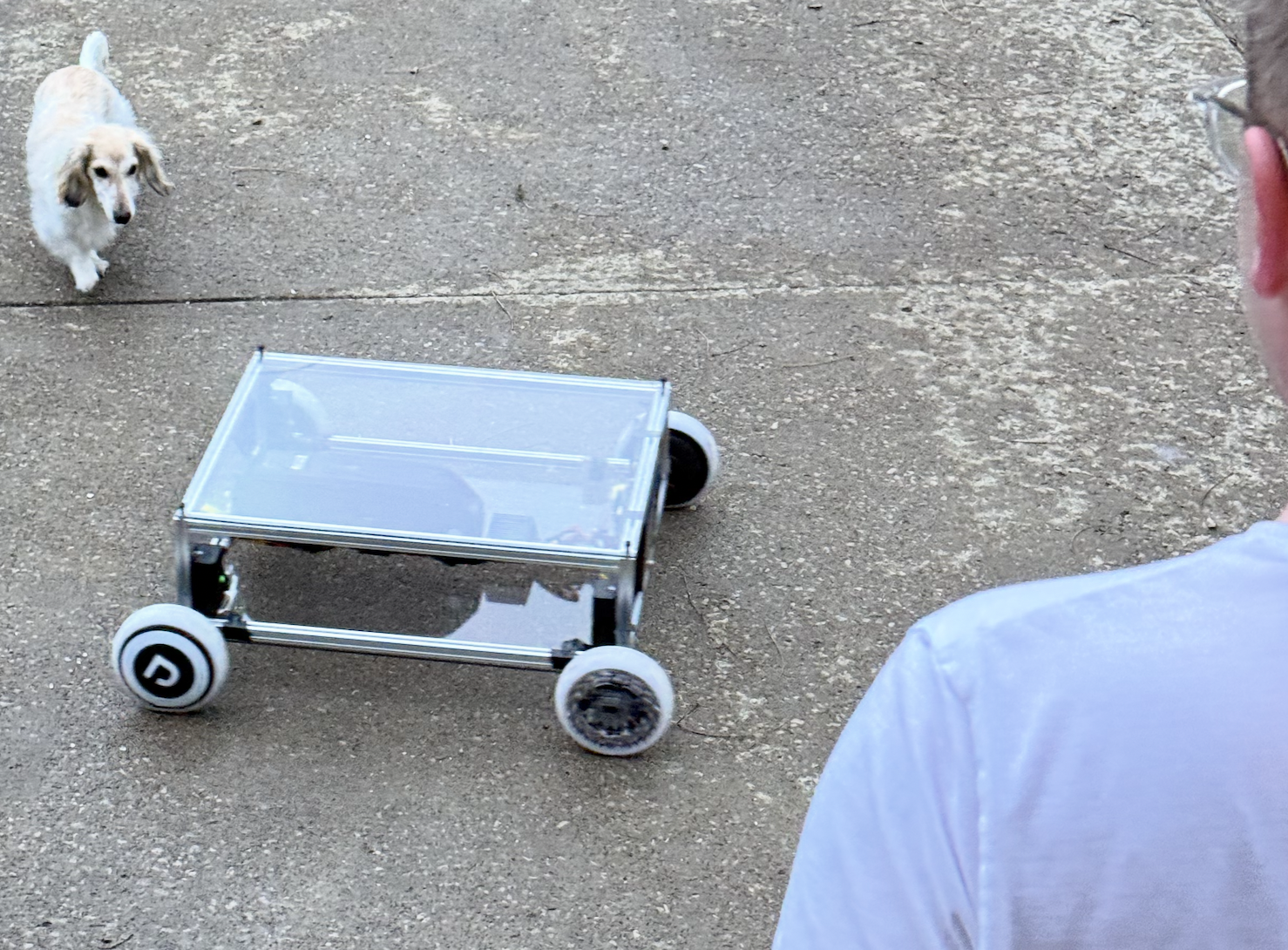
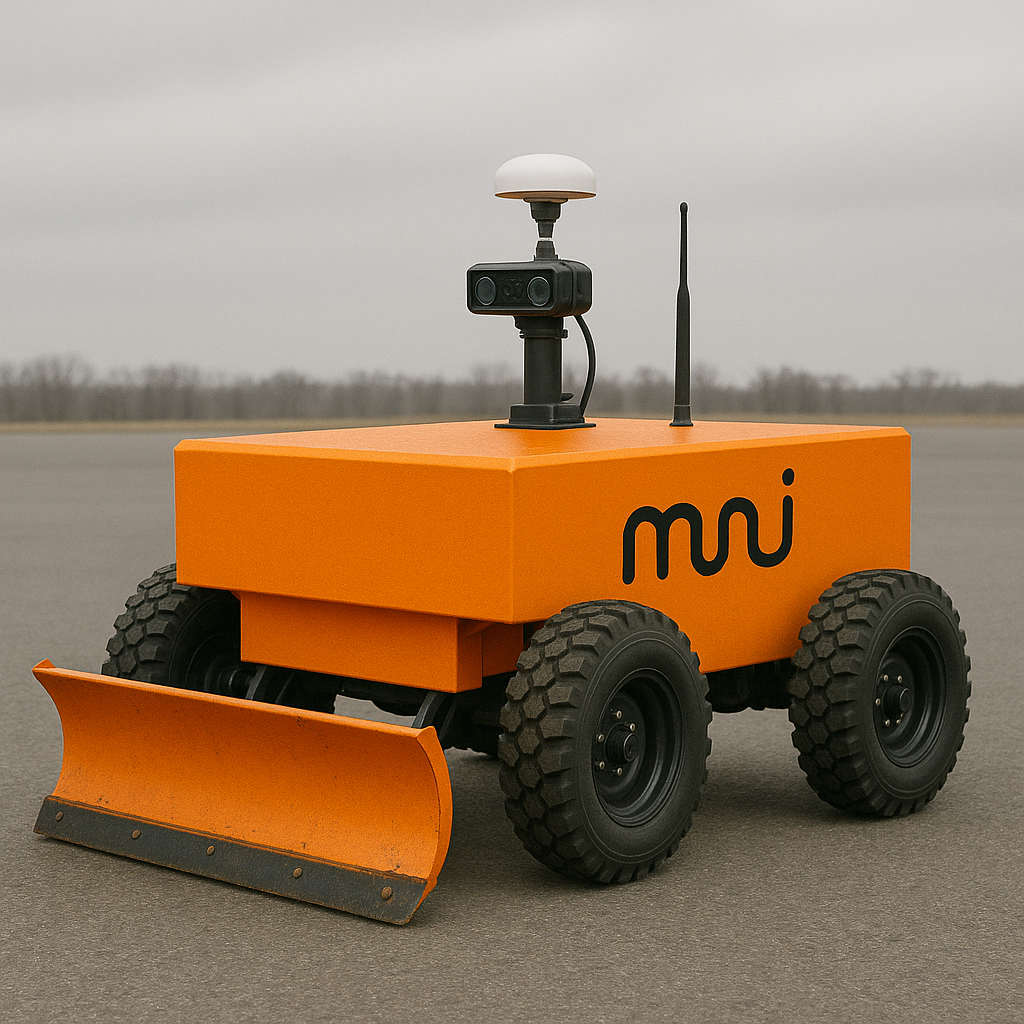
The BVR is our foundational mobile platform: a 4-wheel skid-steer rover designed for sidewalk-scale work.
|
|
|
| bvr0 | bvr1 | |
|---|---|---|
| Status | Complete December 2025 | In development spring 2026, shipping summer 2026 |
| Description | Engineering prototype, DIY build | Mass-produceable rover, pre-assembled |
| Chassis | 600mm × 600mm 2020 extrusion | 600mm × 600mm precision 2020 + sheet metal shell |
| Compute | Jetson Orin NX | Jetson Orin NX + 10" rack |
| Drivetrain | 4x hoverboard hub motors, VESC | 4x brushless direct drive motors, VESC, heavy duty tires |
| Power | 48V 20Ah (~1kWh) | 48V 40Ah (~2kWh), swappable |
| Battery life | ~2-3 hours | ~4-8 hours (per charge) |
| Connectivity | LTE | LTE + RTK GPS |
| Tools | Snow auger | Auger, spreader, plow |
| Cost | ~$5,000 (parts) | $18,000 |
| Assembly time | ~40 hours | ~8 hours |
| Docs | Manual · Datasheet | Coming soon |
| Build your own | Pre-order → |
Depot is the infrastructure that ties the fleet together: browser-based teleop, real-time dashboards, and session recording.
| Self-hosted | 10" Rack | Managed | |
|---|---|---|---|
| Status | Available | Coming 2026 | Coming 2026 |
| Description | Run on your own hardware | Pre-assembled rack, plug and play | Fully hosted service |
| Operator | Web-based, Xbox, H.265 360-degree | Same | Same |
| Dashboards | Grafana | Grafana, pre-configured | Hosted dashboard |
| Metrics | InfluxDB | InfluxDB, pre-configured | Managed time-series DB |
| Session storage | SFTP, 30-day | 1TB SSD, 30-day | Cloud, configurable |
| RTK base | Optional (~$390) | Included | NTRIP subscription |
| Deployment | Docker Compose | Power + Ethernet | Fully managed |
| Cost | Free (open source) | $6,000 | TBD/month |
| Get started | Pre-order → | Contact us |
Fully configured fleet packages: rovers, base station, training, and support.
| Pilot | Small | Medium | Large | Enterprise | |
|---|---|---|---|---|---|
| Fleet size | 2 rovers | 10 rovers | 25 rovers | 50 rovers | 100 rovers |
| Rovers | bvr1 + tools | bvr1 + tools | bvr1 + tools | bvr1 + tools | Custom config |
| Base station | 10" Rack | 10" Rack | 10" Rack x 2 | Redundant racks | Managed + racks |
| Training | Remote (4 hrs) | On-site (1 day) | On-site (2 days) | On-site (1 week) | Ongoing |
| Support | Email + phone | Priority phone | Dedicated rep | 24/7 dedicated | |
| Price | $50k | $220k | $500k | $950k | Contact us |
| Get a quote → | |||||
Is this fully autonomous?
Not yet. BVR is designed for teleoperation first, autonomy second. An operator controls the rover remotely via Xbox controller with live 360-degree video. The rover has safety systems (LiDAR-based obstacle detection) that will stop it automatically, but a human is always in the loop. We're building toward autonomy incrementally as the system earns trust.
How does teleoperation work?
The operator uses an Xbox controller connected to a web-based interface. Commands are sent over LTE to the rover, which streams back 360-degree H.265 video. Total latency is typically 100-250ms. The operator sees a live feed rendered as an immersive skybox, with telemetry overlays showing battery, speed, and mode.
What's the video latency like?
End-to-end latency (capture -> encode -> LTE uplink -> relay -> LTE downlink -> decode -> display) is typically 100-250ms. If latency exceeds 500ms, the system warns the operator and reduces max speed. If connection is lost for 250ms, the rover coasts to a safe stop.
What sensors does it have?
BVR uses a Livox Mid-360 LiDAR (360-degree x 59-deg FOV, 200k points/sec) for safety and mapping, plus an Insta360 X4 for 360-degree video. The LiDAR provides deterministic obstacle detection regardless of lighting - no ML in the safety path, just geometry.
How does safety work?
The LiDAR continuously scans for obstacles. If anything enters the 1.5m safety radius, the rover triggers an immediate E-stop - all motors go to zero, tools disabled. This is pure geometry, no machine learning, no uncertainty. At 1 m/s, the rover stops within 22cm of detecting an obstacle.
How long does the battery last?
bvr0 has a 48V 20Ah (~1kWh) battery lasting 2-3 hours of typical operation. bvr1 has 48V 40Ah (~2kWh) for approximately 4 hours of continuous clearing, with quick-swap battery packs for extended operation. When voltage drops below 42V, max speed is reduced and the operator is warned. At 39V (critical), the rover performs a safe stop and waits for recovery.
Can it operate in snow and bad weather?
Yes, that's what it's built for. The Livox Mid-360 uses 905nm wavelength which handles light to moderate snow well. Heavy blizzards will degrade sensing, so we don't recommend mapping in those conditions - but the rover can still operate safely under teleop control. The LiDAR measures the snow surface, not what's underneath, which is exactly what you want for plowing.
What tools are supported?
Tools are hot-swappable via CAN bus. Currently supported: snow auger, salt/sand spreader, plow blade. Coming soon: mower deck. Each tool has its own microcontroller (RP2040) that announces itself when connected - no configuration needed, just plug in and go.
Is everything open source?
Yes. All firmware, hardware designs, and documentation are available on GitHub under permissive licenses. You can build your own bvr0 for ~$5,000 in parts. We believe open source is the right way to build infrastructure that cities depend on.
What's the difference between bvr0 and bvr1?
bvr0 is our engineering prototype - hand-built from 2020 aluminum extrusion, ~40 hours to assemble, intended for R&D and early adopters who want to build their own. bvr1 is our production rover - precision-engineered chassis with sheet metal shell, pre-assembled in ~8 hours, designed for municipal deployment.
What's the difference between Depot options?
Self-hosted is free and runs on your own hardware via Docker Compose. The 10" Rack is a pre-assembled base station ($6,000) with everything pre-configured - just plug in power and Ethernet. Managed (coming 2026) is a fully hosted service with no hardware to maintain.
Do I need RTK GPS?
Not required for basic operation. RTK provides centimeter-accurate positioning for georeferenced mapping and future autonomous navigation. The 10" Rack includes an RTK base station. For self-hosted, you can add one for ~$390 or subscribe to an NTRIP network (~$50/month).
How do I get started?
For DIY builders: check out the hardware docs and BOM (~$5,000 in parts). For municipalities: contact us about a pilot program. We're actively looking for partners in Midwestern cities to deploy and iterate with.
What's the warranty?
bvr1: 1 year parts and labor. bvr0 DIY: 90 days parts only.
Software updates are free forever (open source). Spare parts ship within 48 hours. Extended warranty available.
What about support?
Email response: 24-48 hours. Package customers get same-day phone support. On-site service available (travel fees may apply).
What certifications do you have?
LTE modem is FCC certified. Full rover assembly certification pending - targeting UL for bvr1. E-stop is hardware (button on rover), software (operator interface), and automatic (connection loss).
How is data handled?
Self-hosted: telemetry stays on your infrastructure. Managed: encrypted in transit, no third-party sharing. You own your data.
What about liability and insurance?
We carry product liability insurance for manufacturing defects. Customers are responsible for their own operational liability coverage.
What's the total cost of ownership?
| LTE data | ~$30-50/month per rover |
| Electricity | ~$0.50/day per rover |
| Operator time | 1 operator per 10+ rovers (supervised autonomy) |
| Maintenance | ~$500/year per rover |
| Expected lifespan | 5+ years |